

First Time Driving in Mallorca? 7 Tips You Should Know
Your first real encounter with Palma will most likely be through its traffic. If you pick up your rental car at the airport, you’re immediately part of the flow. And despite what some visitors expect, it’s not chaotic, it’s simply a busy Mediterranean city, especially during the summer months and particularly during morning and late-afternoon rush hours.
I still think rental cars should come with a built-in “Vacation Mode” button. Something that automatically lowers the pulse of everyone inside.
The good news is that driving in Mallorca isn’t difficult. It just takes a little adjustment at the beginning. So, written with a light touch of humour and but carrying an important message, here are seven practical tips to help you find your rhythm.

1. Relax — You’re on Vacation
If you’re in a taxi, you’re in good hands. The driver knows the flow. He changes lanes with quiet confidence, communicates with other drivers through subtle gestures, and pulls off overtakes you probably wouldn’t even consider.
Behind the wheel as a visitor? That’s a little bit different. You drive a little slower. You double-check the GPS. At the same time, you’re getting used to a new car, new roads… It’s a lot. And that’s completely normal.
Before leaving the rental car park, give yourself a moment. Adjust your seat properly. Set your mirrors. Turn on the air conditioning. Connect your phone and program your GPS. When everything feels settled – then start driving.
2. Understand the Roads: Speed Limits & Roundabouts
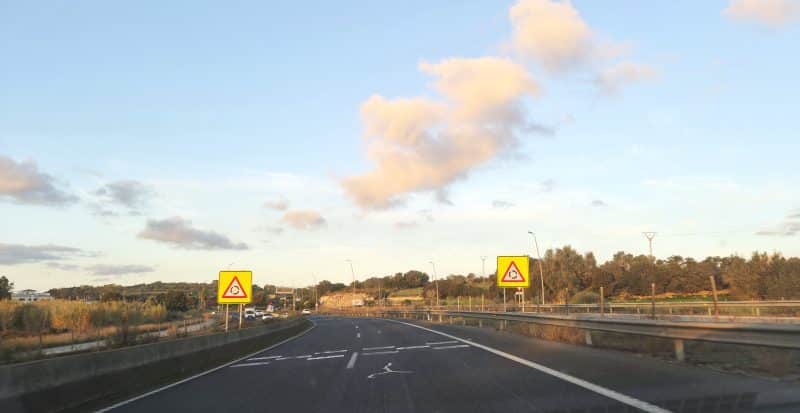
Mallorca’s road network is well maintained and generally easy to navigate, but it helps to understand how it works before you settle into cruise mode.
Speed limits change more often than some visitors expect. On highways (autovías), the limit is usually 120 km/h. On main rural roads, it’s typically 90 km/h. As soon as you enter a town or village, it often drops quickly to 50 km/h — and sometimes even 30 km/h in residential areas.
These transitions can happen within a short distance, so staying alert to signage is important. Speed cameras are present, and fines are enforced consistently.
And then there are the roundabouts.
Mallorca has embraced them enthusiastically. You’ll find them at highway exits, between villages, and even in smaller residential areas. They are designed to keep traffic flowing, but they require attention and early lane choice. A few simple principles make life easier:
- Slow down before entering and always give priority to traffic already inside the roundabout.
- Choose your lane early based on your exit.
After a day or two, roundabouts start to feel surprisingly logical. They’re less about speed and more about rhythm.
3. Be Nice in Traffic (Especially in Summer)
During the summer season, driving in Mallorca means sharing the roads with significantly more vehicles than usual. Traffic around Palma and the larger towns can become slow, especially during peak commuting hours.
It’s easy to forget that for many on the road, this isn’t vacation time but part of their daily routine. They’re commuting, managing family life, and moving through a regular weekday — just like in any other city.
Local drivers may appear confident and decisive, especially around Palma but there’s really no need to match their tempo right away. Take your time, stay patient and keep an eye out for pedestrians near crossings and in town centres.
- Keep a steady, normal pace.
- Stay right if you’re driving more slowly.
- Avoid unnecessary overtaking games.
- Allow faster vehicles to pass without feeling pressured.
4. Respect Cyclists -They’re Everywhere

Mallorca is one of Europe’s most popular cycling destinations, particularly in spring and autumn, and you will frequently encounter both individual riders and larger groups on rural roads and in the mountains.
Spanish law requires drivers to reduce their speed by 20 km/h below the posted limit when overtaking cyclists and to leave a minimum distance of 1.5 meters. Fines for failing to do so can start at around €200.
You are allowed to cross a solid centre line when overtaking cyclists, provided visibility and oncoming traffic allow it safely.
A little patience here makes a significant difference.
5. Parking in Palma de Mallorca

Finding parking in central Palma can occasionally feel like solving a small puzzle, especially during the high season. Even with the best planning, things don’t always go smoothly.
Street parking is limited and regulated by colour-coded zones. Blue zones require payment, white lines are generally free, and yellow lines indicate no parking. Always double-check signage, as restrictions can vary by time and area
If you’re circling the same block more than twice, consider a parking garage. It often saves time, stress, and unnecessary tickets.
For a detailed breakdown of parking options, zones, and insider tips, check out this guide: Parking in Palma de Mallorca – A Simple Guide
6. Driving and Parking in Small Villages
Exploring Mallorca’s small villages is one of the true highlights of the island. Stone buildings, quiet squares, and narrow streets create a timeless atmosphere.
However, many of these streets were designed centuries ago and were not intended for modern vehicles. One-way systems, tight corners, and resident-only zones are common.
Whenever possible, look for signposted parking areas at the edge of the village and walk into the centre. The short stroll allows you to enjoy the surroundings properly and avoids unnecessary stress — or accidental scratches.
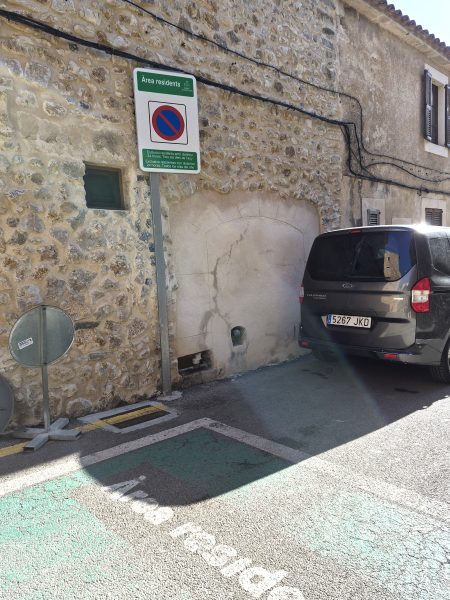
Also, watch for signs that say “Area residents” or indicate resident-only parking — these spaces are reserved for locals.
If many cars are parked outside the village, there may be a market or festival happening. Be flexible with your schedule and enjoy the local atmosphere.
7. Don’t Drink and Drive

When driving in Mallorca, it’s important to remember that Spain enforces strict alcohol limits. The legal blood alcohol limit is 0.5 g/L for most drivers and 0.1 g/L for those who have held their licence for less than two years. Fines start at €500 and increase for higher readings, and in serious cases authorities can confiscate your licence on the spot.
The best approach? Nominate a designated driver, or better yet, use Mallorca’s excellent taxi and ride-sharing services when you’re planning a long lunch with local wine. The island is too beautiful to risk losing your ability to explore it.
Read more:
Rental Car Insurance in Mallorca – What you need to know before you book
Best Car Rental in Mallorca with No Excess 2026 – Top Picks for Quality, Price & Value