


What you need to know before you book
Mallorca has dozens of rental companies, several comparison sites, and roughly a thousand opinions about which is best. This guide cuts through that. We’ve been renting cars on the island for over a decade — same roads, different companies, same recurring mistakes made by first-timers. Here’s what actually matters, in the order it matters.
In this guide:
1. Do you actually need a car?
Mallorca is 3,640 km² of mountains, coves, and market towns — and almost none of the good stuff is on a convenient bus route. Cala Varques, the Tramuntana villages, Cap de Formentor, the weekly markets: all either inaccessible or a logistical puzzle without your own wheels.
There are two real exceptions. If you’re staying in Palma itself and plan to stay there, the city is walkable, taxis are reasonable, and parking can at times be a genuine headache in the city centre. The second exception is if you’re based just outside Palma — somewhere like Platja de Palma, for example. The bus connection into the city is solid, and if beach days and city evenings are your plan, you can get by just fine without a car for the whole trip.
But if you’re based anywhere else on the island, or if you want to actually explore, a car is not optional — it’s the trip.
Our take
We’ve visited Mallorca 50+ times and rented a car every single time. Never once regretted it. The freedom to leave when you want, stop where you want, and avoid shared transfers is worth every cent of the rental cost.
2. When to book — and how prices move
Mallorca is one of Europe’s busiest summer destinations. July and August are the peak of the peak — car inventory genuinely runs low, and prices reflect that. This is not rental company marketing. It’s supply and demand, and the supply is finite.
Best price window
3–5 months
before travel in summer for the best rates
Peak season
Jul – Aug
book early or pay significantly more
Best value months
May, Oct
warm, quiet, cheaper, and uncrowded beaches
Free cancellation
Always
book early, cancel if plans change
| Period | Demand | Prices | Our advice |
|---|---|---|---|
| Jan–Mar | Low | Very cheap | Walk-in rates fine. Almonds in bloom, Tramuntana in the mist. Underrated. |
| Apr–Jun | Medium | Moderate | Book 6–8 weeks ahead. The island at its most beautiful. |
| Jul–Aug | Very high | Expensive | Book 3–5 months ahead. Prices double or triple last-minute. |
| Sep–Oct | Medium | Moderate | Best month: October. Warm sea, thin crowds, reasonable prices. |
| Nov–Dec | Low | Cheap | Many beach restaurants closed, but great for driving routes and hiking. |
Tip
Book with free cancellation as soon as your flights are confirmed. Prices only go up. If something cheaper appears later, cancel and rebook. Most reputable platforms allow this.
3. How much does it really cost?
This is where the confusion starts. The headline price on a comparison site is almost never the final price. By the time you’ve added mandatory insurance top-ups, fuel policy fees, and the desk upsell you didn’t expect, a €12/day car can easily become €35–40/day.
Here’s a realistic breakdown for a week in July in a small car:
Base rate
€120–200
for 7 days
Full insurance
€70–140
7 days, varies by company
Total realistic budget
€200–350
7 days, fully covered
Fuel
€40–80
depending on driving
Fuel policy matters more than most people realise. “Full-to-full” is the fairest option — you fill up before return and pay only for what you use. “Full-to-empty” sounds convenient but means you’re buying a tank you may not need. Avoid it if you can.
4. Insurance: the part that trips everyone up
This is the single biggest source of stress and extra cost in Mallorca car rentals. Let’s go through it plainly.
What’s included by default
Every rental car in Spain comes with mandatory third-party liability (it’s the law). This covers damage to other people and other vehicles. What it does not cover is damage to your own car — which is the bit that usually costs you.
The excess problem
The base rental usually includes Collision Damage Waiver (CDW) with an excess — often €600–1,800. This means if you scratch the car, reverse into a pillar, or return it with a dent, you pay the first €600–1,800 from your own pocket.
Note!
At the rental desk, they will offer to reduce your excess to zero for an extra €10–20/day. It’s a hard sell. Some counters are aggressive about it. You do not have to accept — but you should understand your options before you say no.
Your five options
- Book a fully inclusive rate from the start. Some companies — especially local ones — offer a genuine all-in price that covers everything. This is the cleanest option: you know exactly what you’re paying, and there are no conversations to be had at the desk. Look for this when comparing.
- Accept the excess and self-insure. Fine if you’re a careful driver and comfortable with the risk. Scratches on narrow Mallorcan roads happen to everyone eventually.
- Buy the full waiver at the desk. Convenient, instant, but usually the most expensive option. Prices vary enormously between companies.
- Buy excess insurance separately beforehand. Companies like Questor or RentalCover.com offer this for £3–8/day — significantly cheaper than the desk rate. Buy it before you travel.
- Check your home insurance policy. Some home insurance packages include coverage for excess charges on rental cars abroad. Similarly, some premium credit cards include CDW, but check the small print carefully as coverage conditions vary.
Our approach: book a fully inclusive rate where possible, or use a third-party excess policy bought in advance. Either way, know what you’re covered for before you reach the desk — not after.
On tyres and glass
Standard CDW often excludes tyres, windscreen, and the undercarriage. On Mallorca’s mountain roads, this matters. Check what your policy covers — and if you’re driving the Tramuntana regularly, make sure you’re covered for those.
A note on comparison sites: Rentalcars.com, DiscoverCars, and AutoEurope are all legitimate aggregators – and most now offer their own insurance product when you book through them. The way this typically works: you pay a flat fee upfront through the platform, and if damage occurs, they reimburse you after the rental company charges your card. That means you’re still paying out of pocket first and claiming back later, so make sure you have the funds available on your card before you travel. Always read what’s included before you confirm.
5. Rental companies at Palma airport
There’s no shortage of options at PMI. The companies below are the ones you’ll encounter most often. We’ve used or researched all of them over the years. None of them are perfect. All of them can be fine with the right preparation.
VIMA
Local – Recommended
A local company with competitive prices and genuinely good service. Transparent, no hard sell. Worth booking early to secure the best rates. Cars can be picked up directly at the airport or delivered to hotels across the island.
Recommended
Recordgo
Local – Budget
Good prices, decent cars. Some reports of aggressive upselling at the desk. Book all-inclusive if possible and stay firm.
Good if prepared
Centauro
Local – Budget
Cheap rates, but can be thorough at car inspection. Document everything on pickup. Reviews are mixed but mostly fine when you know what to expect.
Good if prepared
OK Mobility
International
Mixed reviews — and we’ve experienced both ends of that ourselves. Can be excellent, can be frustrating. Reasonable prices and a varied fleet, but consistency isn’t their strong point.
Inconsistent
Goldcar
Budget / Volume
Very high volume operation. Complaints about upselling and inspection disputes are common. Not our go-to. Fine if you go in eyes open.
Approach with caution
Hertz / Avis / Sixt
International Premium
Reliable, predictable, higher prices. Good for anyone who wants zero surprises and is willing to pay for it.
Reliable but pricey
6. Picking up and dropping off
Palma airport (PMI) has two rental car zones — and knowing which one you’re heading to before you land saves a lot of confusion in arrivals.
ON SITE
Terminal counters
The larger international brands — Hertz, Avis, Sixt and others — have counters inside or directly adjacent to the terminal. Collect your bags, sign the contract, pick up the keys. With some companies, like Recordgo and Goldcar, there’s an extra step: after signing at the terminal desk, you’ll need to head to their separate office in the car park to actually collect the keys. Not a big deal — but worth knowing before you land.
OFF-SITE PARKING G
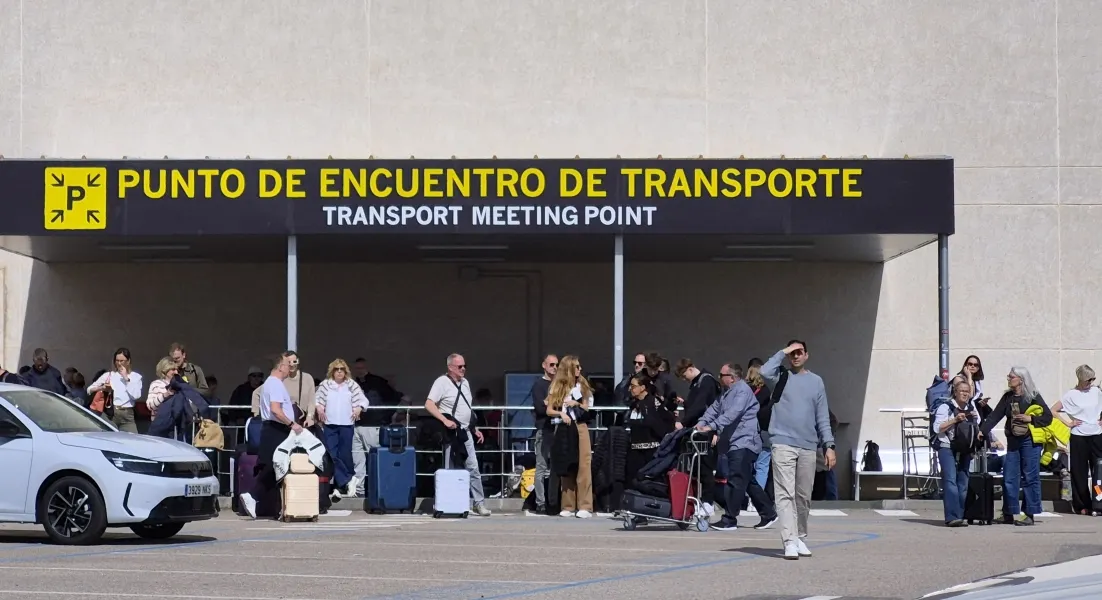
Transport Meeting Point
Many local and mid-size companies operate from Son Oms. Head to the Transport Meeting Point in Parking G, where shuttle buses depart for several rental companies. Some — VIMA included — let you collect the car directly in the car park without needing the shuttle.
At pickup
- Film the entire car on your phone before you drive away. Walk around it. Open the boot. Look underneath. Get it on video, time-stamped.
- Check for existing damage that isn’t on the condition sheet. Point it out and get it noted — in writing, by a staff member.
- Confirm the fuel level matches the paperwork.
- Make sure you know your excess amount. Ask if you’re unsure.
- If the car is new or unfamiliar, take a few minutes to go through the basics before driving off — gear shift, touchscreen controls, indicators. It sounds obvious until you’re on a roundabout trying to find the windscreen wipers.
From experience
We once picked up a car that had clearly lived a full life — scratches and dents in places we hadn’t expected. We were methodically filming every scratch and dent — there were quite a few — when a staff member came out smiling and told us not to worry: “We don’t look at individual scratches, we look at areas — and on this car, they’re pretty much everywhere.” We drove away considerably more relaxed. The lesson: don’t panic about a well-worn car. But film it regardless — reassuring words at pickup don’t count for much if something goes wrong at drop-off.
At drop-off
- Return in daylight if possible. Damage is harder to dispute in a dark car park.
- Fill up at the last petrol station before the airport rather than on the airport complex — it’s consistently cheaper. There’s a station in the Son Oms industrial area, just before the airport turn-off.
- Insist that a staff member is present when you hand over the car. Do not leave keys in a drop box if you can avoid it — see below.
- Ask for a written confirmation of return. Some companies email it, others don’t. Follow up if you don’t receive one.
It happened to us
We returned a car one evening to a chaotic car park — crowds, no staff to be seen. On the company’s instruction, we dropped the keys in a box and left. Two days later, €560 appeared on the credit card for two damage claims we had no knowledge of and no way to disprove. No video of the return, no staff signature, no recourse. Film the car on the way out and on the way back in.
7. What kind of car do you need?
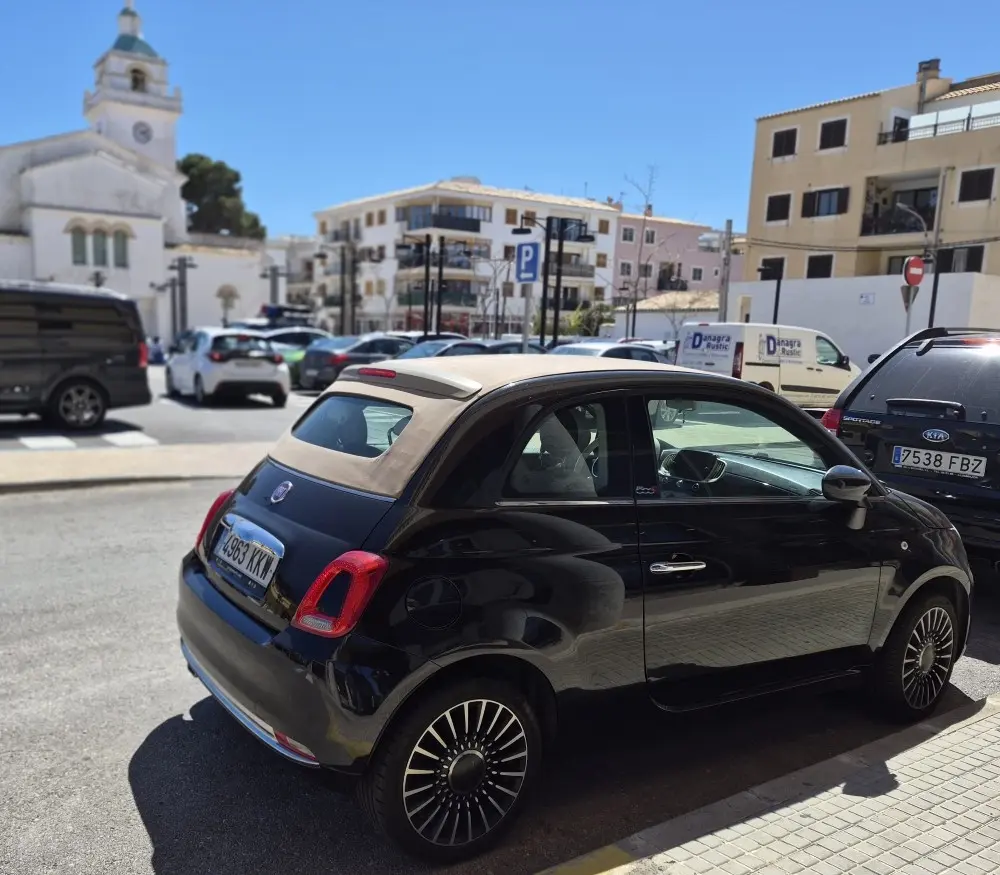
For most visitors: a small car. An Ibiza, Polo, or Fiesta-sized vehicle handles 95% of Mallorca driving easily, parks in spaces a larger car won’t fit, and costs less to rent and fuel.
The exception is the Tramuntana mountains. The roads up there are narrow, the bends are tight, and meeting a tourist coach on a single-track road is a rite of passage. A small car is actually better here, not worse.
Consider upgrading to a medium car if you’re travelling with more than two people and luggage, doing longer road trips, or planning to spend time on motorways where the extra comfort matters.
We’ve seen this more than once
A family of four, luggage piled in laps, crammed into a Fiat 500 because it was the cheapest option on the list. Nobody on that trip was winning any awards for planning. If you’re travelling with people and bags, size up. The price difference between a city car and a compact family car is rarely worth the discomfort.
SUVs: rarely necessary. Mallorca’s roads are paved. The off-road capability won’t be used, and the vehicle will be harder to park. Unless you specifically want one, save the money.
8. Driving rules and road tips
Spain drives on the right. Speed limits: 120 km/h on motorways, 90 km/h on single carriageway roads outside towns, 50 km/h in urban areas unless signed otherwise. Speed cameras are common on the Ma-19 (airport motorway) and around Palma.
Drinking and driving limits are stricter than the UK — 0.5g/L blood alcohol for general drivers, 0.3g/L for drivers with less than two years’ experience. Don’t risk it. Taxis are inexpensive.
Rules that catch visitors off guard
Spain takes driving conduct seriously in ways that aren’t always obvious. You can be fined for driving shirtless, wearing flip-flops or high heels, or resting your arm out of the window. Using your phone without a mount is illegal — not just inadvisable. In residential zones and near hospitals, honking or playing loud music can also result in a fine. None of this is aggressively enforced on quiet country roads, but in towns and city traffic it’s worth knowing. When in doubt: put the air conditioning on and keep the windows up.
The Ma-10 — the main Tramuntana road from Andratx to Pollença — is one of the great drives in Europe. Do it. Budget three hours minimum, stop at Valldemossa and Deià, and don’t rush the bends.
While you’re on the Ma-10, the detour to Sa Calobra is worth it — 26 hairpin bends down to a dramatic gorge and a beach you can’t reach any other way. Allow an extra hour, go early, and be prepared for coaches coming the other way on a road that wasn’t designed with them in mind.
9. Frequently asked questions
What documents do I need to rent a car in Mallorca?
A full driving licence (held for at least one year), your passport or EU ID card, and a credit card in the primary driver’s name. Debit cards are not accepted by most companies. An international driving permit is required if your licence is not in Roman script.
What age do you need to be to rent a car?
Most companies require drivers to be at least 21, with one to two years of licence experience. Drivers under 25 often pay a young driver surcharge — typically €5–12/day depending on the company. Worth factoring into your budget.
Can I drive to Formentor with a rental car?
The road to Cap de Formentor is restricted to private vehicles during peak season (roughly May–October). Private cars are not permitted between 10am and 10pm — outside those hours you can drive, but the road is narrow and busy. During restricted hours, take the shuttle bus from Port de Pollença. Check current rules before you go as they are reviewed each season.
Is it better to book in advance or at the airport?
Almost always in advance. The desk price at the airport is consistently higher, and in July–August you genuinely may not find availability. Book online 4–8 weeks ahead for spring and autumn, 3–5 months ahead for summer. Free cancellation policies mean there’s no downside to booking early.
Do I need to pay tolls?
Mallorca has no toll roads. The motorways are free. You may encounter parking meters in Palma and some tourist areas, but no road tolls.
What’s the best way to navigate in Mallorca?
Google Maps works fine and handles the mountain roads well. Download offline maps before you go — mobile signal drops in parts of the Tramuntana. A phone mount is worth bringing; it’s a legal requirement in Spain to use one if you’re following navigation while driving.
Can I take the rental car on the ferry to Ibiza or Menorca?
Usually not without prior permission from the rental company, and many explicitly prohibit it. Check your contract before booking any ferry. If you need a car on another island, it’s cheaper and simpler to rent separately there.
Ready to compare prices?
We’ve reviewed companies at Palma airport – Read the company reviews